1. Start from your channel and your season
A stationery shop needs breadth in small quantities. A retail chain needs a fixed back-to-school range in many stores at once. An office supply dealer needs steady replenishment of staples, clips and copy paper. An online seller needs a few products under one brand, with listings that hold up. Write down your target retail or resale price, the quantity you can sell in a season and the countries you sell in.
Then look at the calendar. Back-to-school is the largest season: chains order from January to April for delivery in June–July. Dated diaries and planners sell from September to January. Corporate gift sets are ordered by September–October. Office supplies sell all year. Our how it works page shows the order dates that follow from this.
2. Find manufacturers, not only listings
Factory marketplaces show many near-identical offers, and many come from trading companies. Ask for the business licence, the company’s age and export history, and a video call from the production floor. If your logo or brand goes on the product, you want the factory that makes it.
Specialisation matters in stationery. A plant that assembles gel pens rarely binds hardcover notebooks, and a backpack sewer does not make paints. A full range usually means several partner factories. That is one reason buyers consolidate through an importer: one order, one invoice, one shipment.
3. Write a specification each supplier can quote against
Vague requests return incomparable prices. For each item, state what defines it:
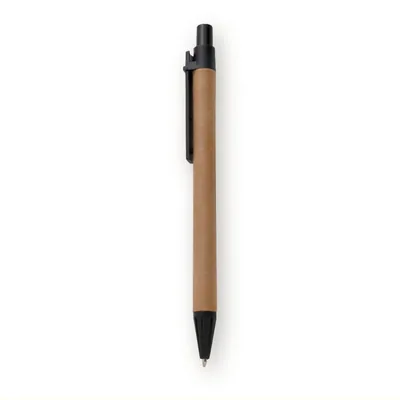
- pens: ink type (gel, oil-based, water-based), line width in mm, tip type, barrel material, refill as standard size, colour of ink and barrel;
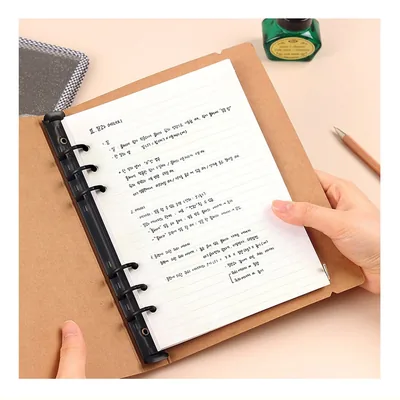
- notebooks: format, paper weight in gsm, sheet count, ruling (lined, dotted, squared, blank), binding (sewn, glued, spiral, twin-wire), cover material;
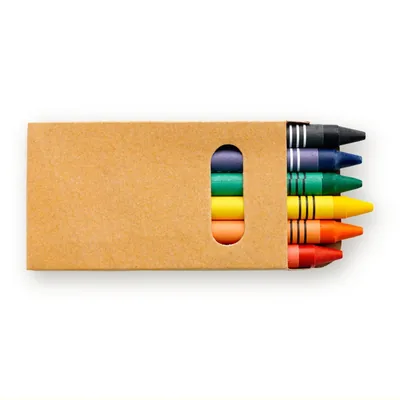
- paints and crayons: number of colours, pigment form, tube or pan size, intended age group;
- pencil cases and backpacks: dimensions, fabric, zips, compartments.
Add packaging: individual sleeve or blister card, inner pack (for example 12 pens per box), display box and outer carton. Pens, pencils and clips are often priced per piece but packed per box, so check that your order quantity matches whole inner packs.
4. Compare quotes on delivered cost
Ask every supplier for the price per piece, set or pack, MOQ per model and colour, carton size, gross weight per carton, production time and payment terms. Then add the rest:
| Cost item | Where it comes from |
|---|---|
| Unit price | Factory quote, per piece or per pack |
| Logo set-up | Plate or screen per colour and position |
| Freight | Carton volume and weight, route and season |
| Customs duty | Tariff code of each item |
| Import VAT | Paid at import, reclaimable for VAT-registered businesses |
| Inspection | Per inspection day or per order |
| Compliance | Labels, translations, test reports where the product needs them |
Stationery mixes light, bulky items with dense ones. Copy paper and sketchbooks are heavy, backpacks and desk organisers take space, and pens are small but numerous. The cheapest unit price is not always the cheapest product on your shelf. Our pricing page explains how we build a delivered price.
5. Sample the way your customers will use the product
Write with the pen until the refill runs low and check for blobs, skipping and leaks. Test gel ink for smudging on the paper you sell with it. Write on both sides of a notebook page with a fineliner and a highlighter to see show-through. Open a sewn notebook flat. Sharpen ten pencils and count broken leads. Fill a backpack and pull on the straps and zips.
Keep one approved sample as the reference for production and inspection. Our samples page explains timing (7–14 days) and how sample costs are credited against the order.
6. Approve print proofs before production
If your logo or artwork goes on the product, approve a digital mock-up first and, for larger orders, a pre-production sample. Check the Pantone reference, the logo size, the print position and the method: pad print, screen print, UV print, laser engraving, hot-foil or blind embossing. For printed notebooks and colouring books, approve the inside page layout as well as the cover. More on this on our private label page.
7. Agree terms in writing
The order confirmation should hold the specification, packaging, labels, delivery date and quality standard. A deposit of 30–50 % is common, with the balance before shipment. Name the sample that production must match.
8. Inspect before you pay the balance
An inspection before shipment checks quantity, appearance, function, packaging and labels on a statistical sample (AQL). For pens it means writing tests, for notebooks binding and page count, for backpacks seams and zips. Pay the balance after you have seen the report. Our quality page lists what we check by product type.
9. Choose the transport
Sea freight usually suits full containers of paper and bulky items. Rail is a middle route for mixed orders, at about 25–45 days to Poland. Air at about 7–12 days is for samples and urgent light goods. Space fills before the factory holidays in late January–February, which fall in the middle of the back-to-school order window. Details on the logistics page.
10. Customs, duty and VAT
The importer of record files the import declaration, pays customs duty according to the tariff code and pays import VAT. You also need an EORI number. Duty differs between pens, paper products, bags and art materials, so check the code for each item before you calculate your margin. The EU TARIC database shows the rates.
11. Make the product legal to sell
Since 13 December 2024 the GPSR has applied to consumer products in the EU. Each product needs an EU economic operator, contact details on the product or pack, a type or batch number and warnings in the language of the country of sale. On top of that:
- children’s art sets, figure-shaped erasers and finger paints can fall under the toy rules;
- plastics, inks and paints are subject to REACH restrictions, for example phthalates in PVC;
- electric sharpeners and calculators with batteries need CE documents and battery labelling;
- packaging brings EPR registration in many countries.
For children’s items we request the manufacturer’s test reports, for example EN 71-3, per product and on request. FSC or PEFC claims on paper are possible only where the manufacturer holds a valid chain-of-custody certificate for that product.
The alternative
If you would rather not be the importer, buy through an EU importer: you get an EU invoice, inspected goods and a delivered price. That is what we do, across 600+ products and custom sourcing. Send us your product list and compare our offer with your own calculation.