What the GPSR is
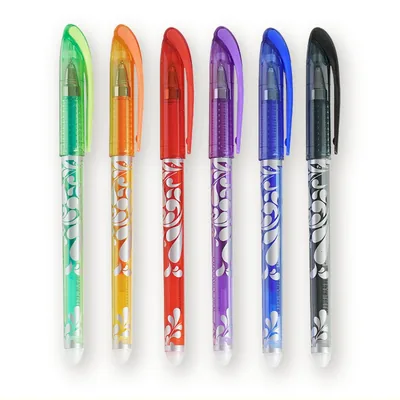
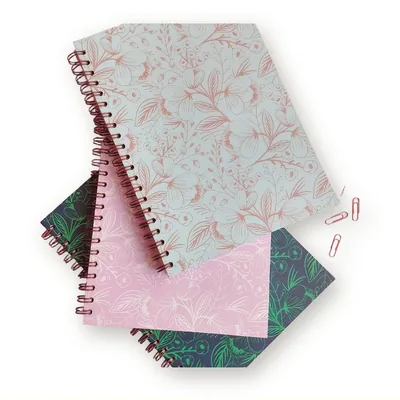
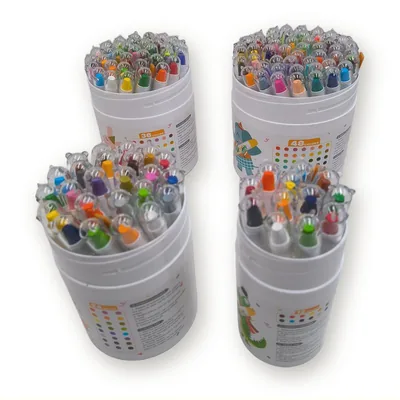
The General Product Safety Regulation (EU) 2023/988 replaced the old General Product Safety Directive. It applies to all consumer products that are not covered by more specific EU safety rules, and it fills gaps where they are. For stationery that means almost everything sold to consumers: pens, pencils, markers, notebooks, paper, sticky notes, school supplies, pencil cases, backpacks, desk items and gift sets. Items sold only to businesses for professional use fall outside, but office supplies often reach consumers as well, so most sellers label them all.
Who must be named
A product can only be placed on the EU market if there is an economic operator established in the EU who is responsible for it: the manufacturer, an importer, an authorised representative or a fulfilment service provider. When goods come from a manufacturer outside the EU, the importer usually takes this role. For goods we import, we act as the importer.
The label must show:
- the manufacturer’s name, registered trade name or trademark, and postal and electronic address;
- where the manufacturer is outside the EU, the name and contact details of the EU economic operator, for example the importer;
- a type, batch or serial number, or another element that identifies the product;
- warnings and safety information where needed, in a language easily understood by consumers in the country of sale.
On the product, on the pack, or in the document
The details go on the product itself. Where the size or nature of the product does not allow it, they may go on the packaging or in an accompanying document. In stationery that applies often: a single pen, eraser or pencil has little space. Options that work:
| Product | Practical place for GPSR data |
|---|---|
| Notebook, planner | Back cover print, belly band or shrink-wrap sticker |
| Pens and pencils in sets | Blister card, box or sleeve |
| Pens sold singly from a display box | Short code on the barrel plus details on the display box; discuss the case with us |
| Sticky notes, memo cubes | Wrapper or back of the pad |
| Pencil cases, backpacks | Sewn-in label plus hang tag |
| Paints and art sets | Box, with warnings and age information |
| Office supplies in boxes | Box label for staples, clips and pins |
Plan this before artwork is approved. Adding stickers after arrival costs time and money per piece.
Batch numbers and traceability
A batch or type number lets you trace a product back to a production run. A simple scheme works: model code plus production month, printed on the pack and on the carton. Keep the link between the batch, the order and the supplier documents. If a problem appears, you can then withdraw only the affected run.
Warnings and languages
Warnings must be in the language of each country of sale. Typical stationery warnings concern small parts on items used by children, sharp points on compasses and cutters, and hazardous contents in some paints and glues. Multilingual labels are normal for products sold in several countries. Check the list of languages against your markets before printing; Switzerland and Belgium, for example, need more than one.
Online listings
Sellers who offer products online must show the same information in the listing: the manufacturer’s name and contact details, the EU economic operator where needed, a picture and type of the product and any warnings or safety information. Marketplaces now ask for these fields when you create a listing. Our pages for online sellers explain what we supply for listings.
Duties beyond the label
The GPSR also asks operators to keep technical documentation and an internal risk analysis, act on safety problems and report dangerous products and accidents through the EU Safety Business Gateway. Importers check that the manufacturer has met its duties and keep documents available for authorities. For stationery, the risk analysis often draws on material declarations and test reports: REACH declarations where the material requires it, and for children’s items the manufacturer’s test reports, for example EN 71-3, on request and per product.
Other marks that may apply
The GPSR label is not the only one. Depending on the product:
- CE marking: only where an EU directive requires it, for example toys or electric sharpeners and calculators. Ordinary pens and notebooks do not carry CE marking, and it should not be added.
- Batteries: calculators and electric sharpeners with batteries fall under the Batteries Regulation (EU) 2023/1542, with labelling and producer registration in each country of sale.
- Packaging marks: the Triman logo and sorting information in France, environmental labelling of packaging in Italy, and packaging registration such as LUCID in Germany or BDO in Poland.
- CLP: some paints, glues and markers with hazardous mixtures need hazard labels.
- EAN barcode: not a legal requirement, but retail chains and marketplaces expect it.
Who registers packaging depends on who places the goods on the market in each country. We explain the split on our quality and compliance page.
A checklist for your artwork
- Manufacturer name and postal and e-mail address.
- EU economic operator name and address, if the manufacturer is outside the EU.
- Model code and batch number.
- Warnings, age information and instructions in the languages of sale.
- Packaging sorting marks for the target countries.
- EAN barcode.
- Marks such as CE only where a directive requires them.
How we handle it
For goods we import, we act as the EU importer and give you the GPSR data for labels and listings. For private label we add it to your artwork and check it on the proof. See private label or send us your product list.