The test: designed or intended for play
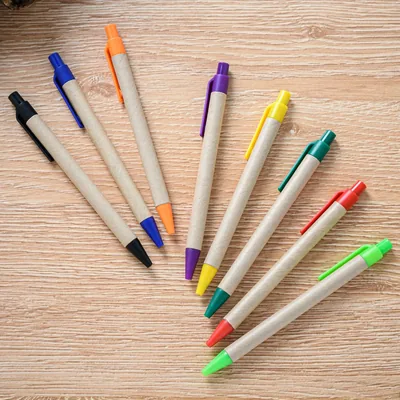
The Toy Safety Directive 2009/48/EC covers products designed or intended, whether or not exclusively, for use in play by children under 14 years. A ballpoint pen, an HB pencil or a box of coloured pencils for school is a writing or drawing tool. A pencil topper shaped like an animal, an eraser that looks like a figure to collect, or a craft kit sold as an activity for young children may be a toy.
There is no single list. Authorities look at the whole product:
- Shape and design: figures, characters, vehicles, collectible series.
- Play value beyond the function: can it be played with as an object?
- Packaging and marketing: images of children playing, words such as “fun”, “play” or “game”, age ranges.
- Where and how it is sold: in the toy aisle or with school supplies.
The same eraser can be stationery in a plain sleeve and a toy in a blister card with a play scene. Packaging is part of the decision, so review it with the product.
Typical borderline items
| Item | Usually | Why |
|---|---|---|
| Pens, pencils, fineliners for school | Not a toy | Writing and drawing tools |
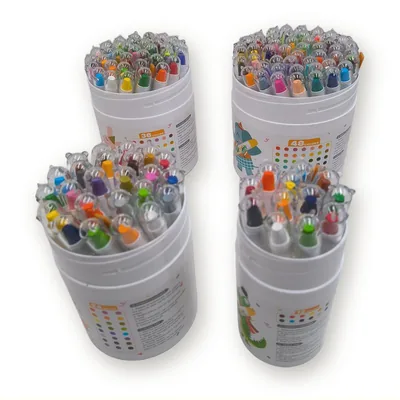
| Coloured pencils, wax crayons | Usually not a toy | Drawing tools, but often sold to young children |
| Figure-shaped or novelty erasers | May be a toy | Play value and collectible design |
| Finger paints | Often treated as a toy | Intended for play by young children |
| Kids art and craft sets | May be a toy | Sold as an activity for children |
| Play-type stationery sets | May be a toy | Pretend-play or gift design |
| Backpacks and pencil cases | Usually not a toy | Containers, unless shaped as plush or figures |
This table is a starting point, not a legal opinion. When in doubt, ask the market surveillance authority in the country of sale or a testing laboratory.
A “not a toy” line on the pack does not change the classification. If the design and marketing say play, authorities treat the item as a toy regardless of the label, so fix the product and packaging instead of adding a disclaimer.
If the item is a toy
A toy placed on the EU market needs:
- CE marking on the toy or packaging;
- an EC declaration of conformity and technical documentation held by the manufacturer;
- a safety assessment and testing against the relevant parts of the EN 71 series;
- warnings and age information in the language of the country of sale, for example the warning for children under 3 where small parts are present;
- the importer’s name and contact address on the toy, packaging or accompanying document.
As the importer we check that the documents exist before goods are placed on the market. We do not present a children’s item as a toy unless the manufacturer’s documents support it.
What the EN 71 parts cover
- EN 71-1: mechanical and physical properties, such as small parts, sharp edges and points.
- EN 71-2: flammability.
- EN 71-3: migration of certain elements, such as lead, cadmium and chromium, from toy materials. Limits differ for dry and brittle materials, liquid or sticky materials, and scraped-off materials such as paint coatings.
- EN 71-7: finger paints, including permitted ingredients and labelling.
Crayons, coloured pencil coatings, watercolour pans and modelling materials are the items where EN 71-3 reports are most often requested.
If the item is not a toy
Stationery that is not a toy still has rules. The GPSR (EU) 2023/988 applies to every consumer product: an EU economic operator, contact details, a type or batch number and warnings in the local language. REACH (EC) 1907/2006 restricts substances in materials, for example certain phthalates in PVC pencil cases and covers, certain heavy metals in paints and coatings, and PAH in rubber or plastic grips. Art paints that contain hazardous mixtures may need CLP labelling.
Many buyers, especially retail chains, ask for EN 71-3 reports on children’s crayons and paints even when the item is not classed as a toy. That is a sensible precaution. For children’s items we request the manufacturer’s test reports, for example EN 71-3, available on request and per product. A test report covers one specific product and version, not a whole range, so we refer to the report itself rather than to a general claim.
Products that imitate food
EU rules prohibit products that look like food but are not, where children could mistake them for food and put them in the mouth. Erasers shaped like fruit, sweets or cakes are the classic stationery example, and scented versions add to the risk. We avoid such products for children.
What to ask your supplier
- Intended age group and the intended use, in writing.
- Test reports for the exact product, with the report number, laboratory, date and photos that match your sample.
- For toys: the declaration of conformity and the CE marking position.
- REACH declarations or test reports where the material requires it.
- Draft packaging with warnings, age marking and GPSR data.
Check that reports match the version you buy. A new colour, pigment or coating supplier can change the result, so ask for updated reports after changes. Our quality and compliance page explains what we request by product type.
Planning for back-to-school
Collecting reports takes time, and new tests take longer. If your back-to-school range includes kids art sets, crayons or novelty erasers, raise the question with the first quote, not after the order. Private label should be confirmed by about March; see the back-to-school programme. Browse colouring and crayons, art supplies and school supplies, or send us your list and we tell you which documents exist for each item.